by Kerri Lether | Oct 1, 2020 | COVID-19, Insurance Law, News & Updates
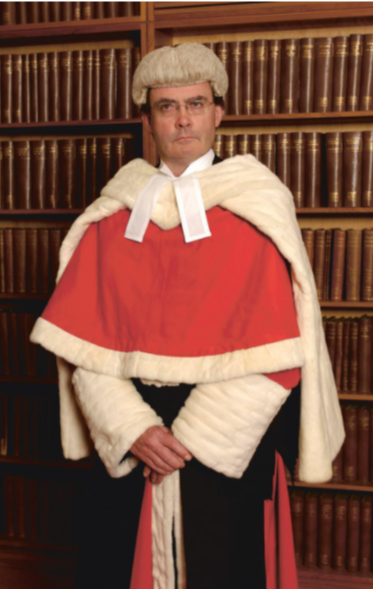
As we have recently reported, the clear trend in the United States Courts is towards finding that the typical Business Interruption (BI) coverages in U.S. commercial property policies will not be triggered by the COVID-19 pandemic. Thus far, the majority of the decisions on this coverage issue have gone in favor of the insurance industry.Interestingly, on Tuesday, September 15, 2020, the High Court of Justice for the Business and Property Courts in Great Britain issued a ruling in a “test case” relating to 370,000 British BI claims. In a lengthy opinion authored by Lord Justice Flaux (pictured below in the traditional attire of the Queen’s Bench), the High Court found that the policy forms at issue extended BI coverage for losses related to the COVID-19 pandemic.
Fortunately, this ruling from across the pond is unlikely to have much impact on the ongoing litigation of this dispute in the U.S. That is because the policy forms that the industry presented to the High Court in the “test case” included a coverage for losses related to the spread of infectious disease. Lord Flaux found that most – though not all – of the policy forms would provide coverage. Because it was a “test case” there was not any specific finding of coverage for any individual insured. Rather, the decision provides the manner in which insureds should present their claims depending on the forms or combination of forms in each policy.
Perhaps the most interesting aspect of this ruling is the contrast in how the U.S. and U.K. markets reacted to the early 2010’s SARS outbreak. In the more risk-averse U.S. market, the industry response to SARS was to quickly adopt virus exclusions. In the handful of rulings on COVID-19-related BI coverage that we have seen to date, it appears that the courts in the U.S. will enforce that exclusion.
In the U.K., the market responded to SARS by offering infectious disease coverage. The insurers offering that coverage have obviously had a decade to collect the premiums that go with it. However, according to the ruling of the High Court, it appears that those insurers will now be required to pay the claims of a broad cross-section of British businesses. Only time will tell which market had the better strategy for dealing with coverage issues associated with the current global pandemic.
As always, if you would like to discuss the issues in this newsletter or any other matter, please feel free to contact Lether Law Group at any time.
|
|
|
The above article is an opinion based on various resources such as industry knowledge and is not to be construed as legal advice or to be used as such. If you require legal advice or would like to inquire further about the information contained in this article, please feel free to contact our office directly.
|
|
by Kerri Lether | Sep 23, 2020 | Insurance Law, News & Updates
While we all continue to deal with the effects and impacts of the COVID-19 pandemic, the western part of our country is now experiencing almost unprecedented wildfires. Over the last two weeks, the west coast has been devastated by wildfires with more than 4.7 million acres burned. Given the widespread devastation losses will likely be in the billions. The large scope of damages will have a drastic impact on insurers both from a potential loss perspective and from substantially increased demand on insurers to adjust claims within statutory time limits for each state.
The anticipated demands on insurers to quickly and efficiently process wildfire claims is exacerbated by a recent emergency notice from the California Insurance Commissioner. On August 26, 2020, the California Insurance Commissioner issued an emergency notice urging insurers to expedite handling of wildfire loss claims and to provide greater flexibility in the handling of claims including the following:
- Provide a minimum four-month advance payment of Loss of Use, Fair Rental Value, or Additional Living Expense.
- Allow a minimum 60-day billing grace period to allow for any lost or destroyed renewal notices.
- Advance payment of at least 35% of limits for personal property without the need to complete an inventory,
- Accept an inventory on non-company specific forms as long as it contains substantially the same information as the company form.
- Expedite payment of vehicle damage claims covered under comprehensive loss coverage.
- Cooperate with consolidated removal efforts coordinated through city, country, and state agencies unless the insurer can provide debris removal more rapidly.
Given the scope of the known and anticipated losses in California, this emergency notice will put additional pressure on the already strained resources that insurers are faced with in light of the COVID-19 pandemic. While not a requirement, this emergency notice may also have the effect of increasing the likelihood of inflated and/or fraudulent claims. The notice provides almost identically to legislation currently on the California Governor’s desk. SB-872 (residential property insurance: state of emergency), which is intended to go into effect in January 2021 for all fire loss claims where a state of emergency is declared. This proposed legislation also raises several issues that insurers need to be aware of. Importantly, with respect to land value, current California law provides that policy holders have the right to buy or rebuild a total loss at a different location. Because insurers do not insure land value, some insurers have read this law to allow for the deduction of land value. This new law expressly prohibits that practice.
It is likely that Washington and Oregon will issue similar notices in the near future in light of the similar scope of losses in those states. Regardless, we anticipate another substantial round of Business Interruption claims as a result of the wildfires. In light of the fact that hundreds of people have been forced into shelters due to evacuations, there also is likely to be an increase in COVID-19 related claims. More importantly, the present impacts of the COVID-19 pandemic will necessarily impact the adjustment and resolution of wildfire claims as resources and necessary activities are all still curtailed in the current environment.
As a result of the large number of losses and requests to expedite adjustment, the threat of inflated and/or fraudulent claims is increased. Therefore, it is important that insurers proactively investigate, adjust, and seek consultation from appropriate professionals as early as possible in the claims process. This includes retaining and seeking opinions from construction/remediation professionals, cause and origin professionals, financial/accounting experts, and, when necessary, legal advice from coverage counsel whenever concerns arise.
Lether Law Group has been handling large first-party property losses for over 32 years. This includes large fire loss and wildfire claims. If you would like to discuss these recent developments or any other matters, please feel free to contact us at any time. The above article is an opinion based on various resources such as industry knowledge and is not to be construed as legal advice or to be used as such. If you require legal advice or would like to inquire further about the information contained in this article, please feel free to contact our office directly.
|
|
by Kerri Lether | Sep 11, 2020 | Decisions, Featured, Insurance Law
The rapid spread of COVID-19 throughout the United States and resulting governmental shut-down orders have sparked a large increase in business interruption claims and subsequent litigation. While “direct physical loss” and “necessary suspension” policy language have been addressed in most jurisdictions, the less commonly litigated terms of civil authority coverage and virus exclusions are the subject of debate in many courts across the country. The following is a summary of notable rulings on COVID-19 business interruption coverages:
- In re: COVID-19 Business Interruption Protection Insurance Litigation, United Statees Judicial Panel on Multidistrict Litigation, MDL No. 2942, 2020 U.S. Dist. LEXIS 144446: The Panel denied the plaintiffs’ motion to transfer and consolidate 263 cases across 48 districts into a single industry-wide business interruption coverage case. The Panel found that consolidation was inappropriate because differences overwhelmed any common factual questions – there was no common defendant, different policy forms, and a diverse group of plaintiffs located throughout the United States. Moreover, the Panel found that consolidation would be inefficient for all parties and courts involved.
- 10E, LLC v. Travelers Indem. Co., United States District Court for the Central District of California Case No. 2:20-cv-04418-SVW-AS, 2020 U.S. Dist. LEXIS 156827: The court granted Travelers’ Motion to Dismiss, interpreting “direct physical loss” to require “the permanent dispossession of something” as opposed to a temporary restriction of the use of property. The 10E court found that the plaintiff-restaurant was not entitled to business interruption loss or civil authority coverage arising from governmental orders restricting restaurants to take-out and delivery due to COVID-19.
- Gavrilides Management Co. v. Michigan Insurance Co., Michigan Circuit Court Case No. 20-258-CB-C30: The court granted Michigan Insurance Company’s motion to dismiss after finding that a loss of income due to orders limiting a restaurant’s operations to take-out and delivery in response to COVID-19 did not satisfy the requirement of physical loss of or damage to property. The Gavrilides court stated that “physical alteration to or physical damage or tangible damage to the integrity of the building” was required for coverage.
- Malaube, LLC v. Greenwich Ins. Co., United States District Court for the Southern District of Florida Case No. 20-22615-Civ, 2020 US Dist LEXIS: Magistrate Judge Edwin Torres recommended granting Greenwich Insurance Company’s Motion to Dismiss COVID-19 Business Interruption claims brought by a restaurant. Where government orders prohibited indoor dining but allowed delivery and take-out orders, Judge Torres found that no “direct physical loss or damage” occurred because the government orders never made the plaintiff’s restaurant uninhabitable or substantially unusable.
- Rose’s 1, LLC v. Erie Ins. Exch., District of Columbia Superior Court Case No. 2020 CA 002424 B, 2020 D.C. Super. LEXIS 10: The court granted summary judgment after finding that government orders restricting business operations do not constitute “direct physical loss.” The court found that that the government’s orders did not cause any “direct” change to properties, that the orders did not have any “effect on the material or tangible structure of the insured properties,” and the orders did not constitute a “loss” because they did not have any “direct physical intrusion on to the insured property.”
- Diesel Barbershop, LLC, v. State Farm Lloyds¸ United States District Court for the Western District of Texas Case No. 5:20-CV-461-DAE, 2020 U.S. Dist. LEXIS 147276: The court granted State Farm’s motion to dismiss, finding that business interruption coverage required tangible injury to property and upholding the policy’s virus exclusion. Specifically, the court found that the shut-down orders were a sequential result of the presence of COVID-19, and therefore, “the primary root cause” of Plaintiffs’ business closure.
- Social Life Magazine, Inc. v. Sentinel Ins. Co. Ltd., United States District Court for the Southern District of New York No. 20 Civ. 3311 (VEC): The court denied plaintiff’s motion for preliminary injunction because COVID-19 does not cause physical damage to property, rather, “it damages a person’s lungs.”
- Optical Services USA, et al. v. Franklin Mutual Insurance Company, New Jersey Superior Court Case No. BER-L-3681-20: The court denied Franklin Mutual’ s motion to dismiss, finding that plaintiffs should have the opportunity to engage in issue-oriented discovery to fully establish the record regarding direct covered losses and to amend their complaint accordingly. The court also found that Franklin Mutual failed to provide any controlling legal authority supporting their interpretation of “direct physical loss,” admitting that the New Jersey legal authority addressing this issue was limited.
- Martinez v. Allied Insurance Company of America, United States District Court for the Middle District of Florida, Case No. 2:20-cv-00491-FtM-66NPM: The court granted Allied’s motion to dismiss, upholding the policy’s virus exclusion. The court found that plaintiff failed to assert that his loss or damage was due to a “covered cause of loss.” Rather, the court found that because the plaintiff’s damages resulted from COVID-19, neither the governmental orders narrowing plaintiff’s dental services nor the disinfection of the dental office constituted a “covered cause of loss” pursuant to the policy’s virus exclusion.
- Studio 417, Inc., et al. v. The Cincinnati Insurance Company, United States District Court for the Western District of Missouri Case No. 20-cv-03127-SRB, 2020 U.S. Dist. LEXIS 147600: The court denied Cincinnati’s motion to dismiss, finding that the plaintiff had adequately stated a claim for direct physical loss and claims under the policy’s civil authority, ingress and egress, and dependent property coverages. Specifically, the court found that plaintiff’s adequately alleged a causal relationship between COVID-19 and their losses – that COVID-19 “is a physical substance” that attached to and deprived Plaintiff’s of their property, making it “unsafe and unusable”.
- Turek Enterprises, Inc. v. State Farm Mutual Automobile Insurance Company, et al., United States District Court for the Eastern District of Michigan Case No. 20-11655, 2020 U.S. Dist. LEXIS 161198: The court granted State Farm’s motion to dismiss, finding that “direct physical loss” required tangible damage and that coverage was otherwise precluded by the virus exclusion. Specifically, the governmental orders and plaintiff’s business interruption losses resulting therefrom “would not have occurred but for COVID-19.”
Lether Law Group currently represents several national insurers in COVID-19 business interruption litigation in state and federal courts in Washington, Oregon, California, and Pennsylvania. If you have questions about any state-specific requirements which have been enacted due to the COVID-19 pandemic or general questions in regard to pending insurance claims and compliance with any regulatory requirements, please feel free to contact our office.
The above article is an opinion based on various resources such as industry knowledge and is not to be construed as legal advice or to be used as such. If you require legal advice or would like to inquire further about the information contained in this article, please feel free to contact our office directly.
|
by Kerri Lether | Aug 12, 2020 | Insurance Law, Misc., News & Updates
Earlier today, the Panel for Multi-District Litigation issued an Order denying consolidation of hundreds business interruption coverage lawsuits related to COVID-19.
The Panel held that the allegedly common issues supporting consolidation, “share only a superficial commonality.” The Panel further held that there would be little potential for common discovery and that because each case will involve, “different coverages, conditions, exclusions, and policy provisions purchased by different businesses in different industries located in different states,” the differences in analyzing coverage will overwhelm any common issues.
The Panel held that consolidation would present serious managerial and efficiency concerns that make consolidation inappropriate for these claims.
COVID-19 Related Business Interruption in District Courts
As a result of this ruling, nearly all of the COVID-19 related business interruption lawsuits filed through the United States will remain in the District Courts where each case originated.
The exception may be for a limited number of insurers. The Panel has asked for additional briefing as to whether insurer-specific MDL’s might be appropriate for Lloyd’s, Cincinnati Ins. Co., the Hartford insurers, and Society Insurance.
Lether Law Group represented The Dentists Insurance Company in opposing MDL treatment for these matters. We are pleased that we were able to obtain this result. If you have any questions or if we can be of assistance on any COVID-19 related matters, including class actions, please feel free to contact us at any time.
by Kerri Lether | Jun 7, 2020 | Featured, Insurance Law, Misc., News & Updates
The announcement included the following statements:
- Damage to commercial property/business caused by theft, vandalism, and/or fire should be covered under a commercial property policy unless that type of loss is specifically excluded;
- Coverage for damage to plate glass windows is dependent upon the individual policy language;
- Business that have been temporarily closed because of the COVID-19 pandemic are not considered vacant under the terms of an insurance policy; and
- A “war and military action” exclusion should not exclude damage caused during a protest.
In addition, the Insurance Commissioner advised business owners to take the following immediate steps if they plan on filing a claim: 1) contact their insurance company; and 2) consider hiring professional help with debris clean up and to secure their property to protect against further damage.
This announcement is not surprising given recent events and widespread resulting property damage.However, this advisement and increase in civil disturbance claims raise numerous coverage issues.These include the potential application of coverage exclusions including the vacancy exclusion, mitigation and duty to protect from further loss requirements, and valuation issues.
In addition, the steps necessary for an insured to properly mitigate damages and protect insured property from further loss is also fact dependent and will require a careful examination of the steps taken by an insured.Whether, and to what extent, any such mitigation efforts are covered by a policy will depend on the individual policy.The potential for coverage for any such steps should be discussed with an insured early in the claim handling process.
Finally, in light of the potentially severe impacts of the COVID-19 pandemic on business throughout the state and country, we expect more complicated valuation disputes.The risk of inflated claims may also increase.
Whether property damage by theft, vandalism, or fire is covered will ultimately be dependent upon the terms and conditions of the actual policy and the specific facts presented in any claim.As result, it is important that insurers proactively and thoroughly investigate each claim based on its unique facts.It will also be necessary to thoroughly and timely respond to these claims in order to avoid extracontractual exposures.
These are just a few of the potential coverage issues raised by the Insurance Commissioner’s announcement and the damage caused during by the recent civil disturbance claims.
Lether Law Group has been handling large first-party property losses for over 32 years.This includes earthquake claims, storm and hurricane losses, wildfire claims, and even a number of claims involving civil disturbances.If you would like to discuss these recent developments or any other matters, please feel free to contact us at any time.
by Kerri Lether | May 20, 2020 | Featured, Insurance Law, News & Updates
As many of you likely recall, the Washington Supreme Court affirmed the trial court’s dismissal of the statutory extra-contractual claims asserted against an employee-adjuster on October 3, 2019 in Keodalah v. Allstate, 194 Wn.2d 339, 449 P.3d 1040 (2019). However, as we noted in our newsletter discussing the opinion, the Court seemingly left open the possibility that certain extra-contractual claims could be brought against adjusters based on the common law.
In particular, we noted that the majority opinion did not address whether a common law bad faith claim against an adjuster was legally sustainable in Washington. In fact, the dissent expressed a belief that such a claim should be recognized in Washington. Further, all of the Consumer Protection Act (“CPA”) claims addressed in Keodalah were per se claims based on violations of statutes and regulations applicable to insurers. The Keodalah court did not address so-called traditional common law CPA claims based on the Hangman Ridge elements proscribing any deceptive or unfair act or practice that occurs in trade or commerce, affecting the public interest and proximately causing injury to business or property.
A recent federal court decision has once again addressed the dispute over whether adjusters can be held liable under certain extra-contractual claims post-Keodalah. In Leonard v. First Am. Prop. & Cas. Ins. Co., 2020 U.S. Dist. LEXIS 23680 (W.D. Wash. 2020), Judge Ronald B. Leighton was confronted with a Motion to Remand after First American removed the Leonards’ state court action asserting various extra-contractual claims against First American and its adjuster. The Removal was based on the premise that the claims asserted against the non-diverse adjuster were fraudulently joined and precluded by Keodalah.
In granting the Motion to Remand, Judge Leighton expressly recognized that the Keodalah court left open the possibility that a common law bad faith claim against an insurance adjuster could be a viable cause of action in Washington. He also cited to Panag v. Farmers Ins. Co. of Washington, 166 Wn.2d 27, 41-42 (2009), wherein the Court held that no contractual relationship was necessary to prevail on a CPA claim, to support the proposition that a traditional CPA claim against an insurance adjuster could also be viable. While Judge Leighton recognized that these causes of action might eventually be dismissed or precluded, he ultimately ruled that “it is better to leave such novel questions of Washington State law to Washington State courts.”
Based on Judge Leighton’s analysis in Leonard, it appears that the Supreme Court’s decision in Keodolah may have only been a partial step in addressing the viability of direct causes of action against insurance adjusters in Washington. We will likely not know with certainty what, if any, claims may be brought against adjusters in Washington until common law bad faith claims and common law CPA claims against adjusters are tested in Washington appellate courts.
If you have any questions regarding the effect of the cases discussed herein or any other issues involving Washington insurance law, please do not hesitate to contact our offices.