1-206-467-5444 info@letherlaw.com

Insurance Coverage & Volcanic Activity
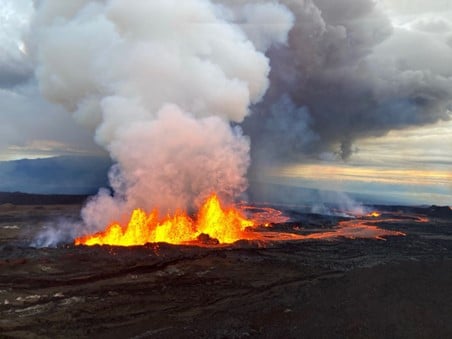
After nearly 40 years of silence, Moku‘āweoweo, the summit caldera of Mauna Loa on the Big Island of Hawaii, began erupting. The eruption lasted for approximately twelve days from November 27, 2022 until December 10, 2022. Big Island residents are no stranger to volcanic activity, but the unpredictable nature of these eruptions can often leave local residents and insurers unprepared. Outside of the insurance industry, most people do not consider or think about whether there is coverage for volcanic related activity under an insurance policy. 

On the Big Island of Hawaii, homeowner’s policies typically cover property damage caused by lava flow. Volcanic eruptions are not specifically excluded under standard homeowner’s policies. Additionally, some homeowner’s policies may include a specific endorsement extending coverage for property damage to dwellings or other structures caused by volcanic eruptions. Under this type of endorsement, coverage is often available for losses caused by eruption, explosion, effusion of a volcano, or a moving outpour of lava.

Homeowners and insurance coverage professionals should also be aware that coverage may be limited under homeowner’s policies that include an earth movement exclusion. When an eruption begins, earthquakes and other seismic activity oftentimes occur throughout the course of the eruption. Pursuant to standard earth movement exclusions in Hawaii, coverage for property damage may be excluded if the property damage is caused by earthquake, land shock waves or tremors before, during, or after a volcanic eruption as opposed to damage from lava and/or the eruption itself. This requires an examination of the proximate cause of the damage itself and can be a complicated issue.

The nature and extent of available insurance coverage after a volcanic eruption can be a complicated issue requiring a careful examination of causation, the nature and extent of the damages involved, and a thorough review of the terms and conditions of the applicable insurance policy. Needless to say, with the proper awareness of exactly what is and is not covered under homeowners’ respective insurance policies, the Big Island of Hawaii remains a dream destination to live and/or vacation. Our firm proudly represents clients across the Hawaiian Islands and we are always happy to answer any coverage related questions you may have.

Hau’oli Makahiki Hou (Happy New Year) to all!

.
Homeowners Insurance: Commonly Asked Questions and Some Simple Advice

It is not uncommon for people to complain about their insurance company. No one likes paying premiums and rarely does anyone enjoy having to make a claim. However, property insurance policies are products that most, if not all, homeowners and renters have. The following are some commonly asked questions and some simple recommendations.

  • As a Property Owner or Renter What Types of Insurance Should I Have?

 All homeowners and renters should carry property and liability insurance. These policies typically provide similar coverages. Homeowners policies provide coverage for the actual structure or residence, the personal property in the residence, and for additional living expenses which may be incurred if a loss takes place. Such expenses can include the rental for an alternative residence, emergency meals, etc. Renters policies provide the same types of coverage except coverage for the actual building. Finally, owners of condominiums should also procure property insurance. Condominium policies obtained by unit owners typically provide coverage for their personal property, additional living expenses, and improvements and betterments contained within their own individual units.

Homeowners, condominium owners, and renters policies also typically provide liability coverage which protects an insured if a claim or suit is filed against the insured. This coverage provides both for an attorney to defend the insured and for payment of any judgment or settlement up the amounts of the policy limit.

  • What Makes for a Good Insurer?

Premium value is always a concern. However, it is better to spend the money to have the right insurer and coverage’s. Although you may want to shop your insurance premium, find out from your agent or broker what you are actually getting for your money. When it comes to customer service, local insurers are going to typically provide better service. It is better to have a claims agent in your neighborhood or community as opposed to a remote agent who does not understand the Northwest. It is always better to have an insurance claims department that actually has a physical presence in Seattle.

  • How Much Insurance is Enough?

It is best to be fully covered than to save a few dollars on premiums. For example, it is important that you properly assess the value of your personal property. It is even more important to understand that the construction costs for repairing your home may be significantly more than you imagine. Given the construction boom in the Northwest, construction prices have gone up dramatically. Your own insurance company may not even recognize this.

Finally, we live in a litigious world. The value of claims against individuals have skyrocketed. Carrying a $100,000 liability policy limit may seem like a sufficient amount. However, if you are sued for traumatic injury you may find that such a limit is not enough.

  • Is Excess Coverage a Good Idea?

Umbrella, or excess, coverage provides liability coverages over the amount stated in your primary policy. Given the exposures present in the current world, it is always a good idea to make sure you have excess or umbrella coverage providing additional protection.

  • Are There Particular Types of Property Coverage that Insureds Should Have?

There are a number of types of property coverages that an insured should make sure they have. These include Guaranteed Replacement Cost Coverage. This coverage usually provides additional limits to an insured when they repair their residence following a loss. Another example involves building code or upgrade coverage. This provides additional coverage if a building department requires modifications to be made to your home or residence. Finally, if you have particular contents items that are high in value, you should consider scheduling the personal property and obtaining additional coverage. For example, most property policies have limitations on jewelry and antiques. For a small amount you can obtain additional insurance for these items.

  • Is Earthquake Coverage a Good Idea?

Seattle has not suffered a major earthquake since February 28, 2001. However, there is always the potential that an earthquake could happen at any time. Earthquake coverage is more applicable to homeowners as opposed to renters or condominium owners. Depending on the age of your home and type of construction, earthquake insurance may be a valuable thing to have. However, make sure that you are getting the right type of coverage. For example, many earthquake policies have limits on how much will be paid out, have high deductibles, etc.

  • What Do I Do If I Have a Claim?

One of the most important things to do if you suffer a loss is to report the loss promptly. Thereafter, cooperate with the agent and claims representative to make sure the claim is processed in a timely fashion.

  • What Happens if My Insurance Company Does Not Properly Respond to My Claim?

Washington is one of the most consumer-friendly jurisdictions in the country for insureds. The insurance industry is heavily regulated. There are very specific requirements that an insurer must follow in regard to how to handle claims. This includes specific response deadlines for how long an insurer has to resolve claims. There are many options for insureds to pursue claims against insurance companies which improperly treat their insureds. If insurers fail to follow these rules or otherwise act in what is termed “bad faith,” they may be exposed to claims under the Consumer Protection Act, claims under the Insurance Fair Conduct Act, and other common law claims. A good place to obtain additional information or to report an insurer that is not acting properly is the Washington State Office of the Insurance Commissioner.

The above article is an opinion based on various resources such as industry knowledge and is not to be construed as legal advice or to be used as such. If you require legal advice or would like to inquire further about the information contained in this article, please feel free to contact our office directly.