1-206-467-5444 info@letherlaw.com

WASHINGTON COURT OF APPEALS WITHDRAWS OPINION ADDRESSING THE INSURANCE FAIR CONDUCT ACT IN THE CONTEXT OF UM/UIM INSURANCE

 As noted in a previous newsletter, Division Two of the Washington State Court of Appeals issued an opinion on April 19, 2022 in Beasley v. Geico General Insurance Company and Aaron Yaws, No. 54997-2-II, which addressed the meaning of the term “actual damages” under the Washington Insurance Fair Conduct Act (IFCA), RCW 48.30.015 and holding that the term “actual damages” includes noneconomic damages. Beasley v. Geico General Insurance Company and Aaron Yaws, No. 54997-2-II.  The unpublished part of the opinion also addressed the issue of tendering “undisputed” amounts in the context of UM/UIM claims, which had not been addressed in prior case law in Washington.

 Last week, The Court of Appeals withdrew the Beasley opinion in response to a Motion for Reconsideration filed by GEICO. The Order granted the Motion for Reconsideration in part, withdrew the earlier opinion, and advised that a revised opinion would be filed.  To date, the revised opinion has not yet been issued. As a result, there is no information regarding which portion of the prior opinion has been reconsidered. Nevertheless, and as a result of the withdrawal, the earlier Beasley opinion is no longer good law and should be disregarded by insureds and insurers alike. 

Lether Law Group currently represents multiple insurers in coverage litigation in state and federal courts in Washington involving claims under IFCA. If you have questions about the implications of Beasley or general questions in regard to pending insurance claims and compliance with Washington insurance law, please feel free to contact our office.
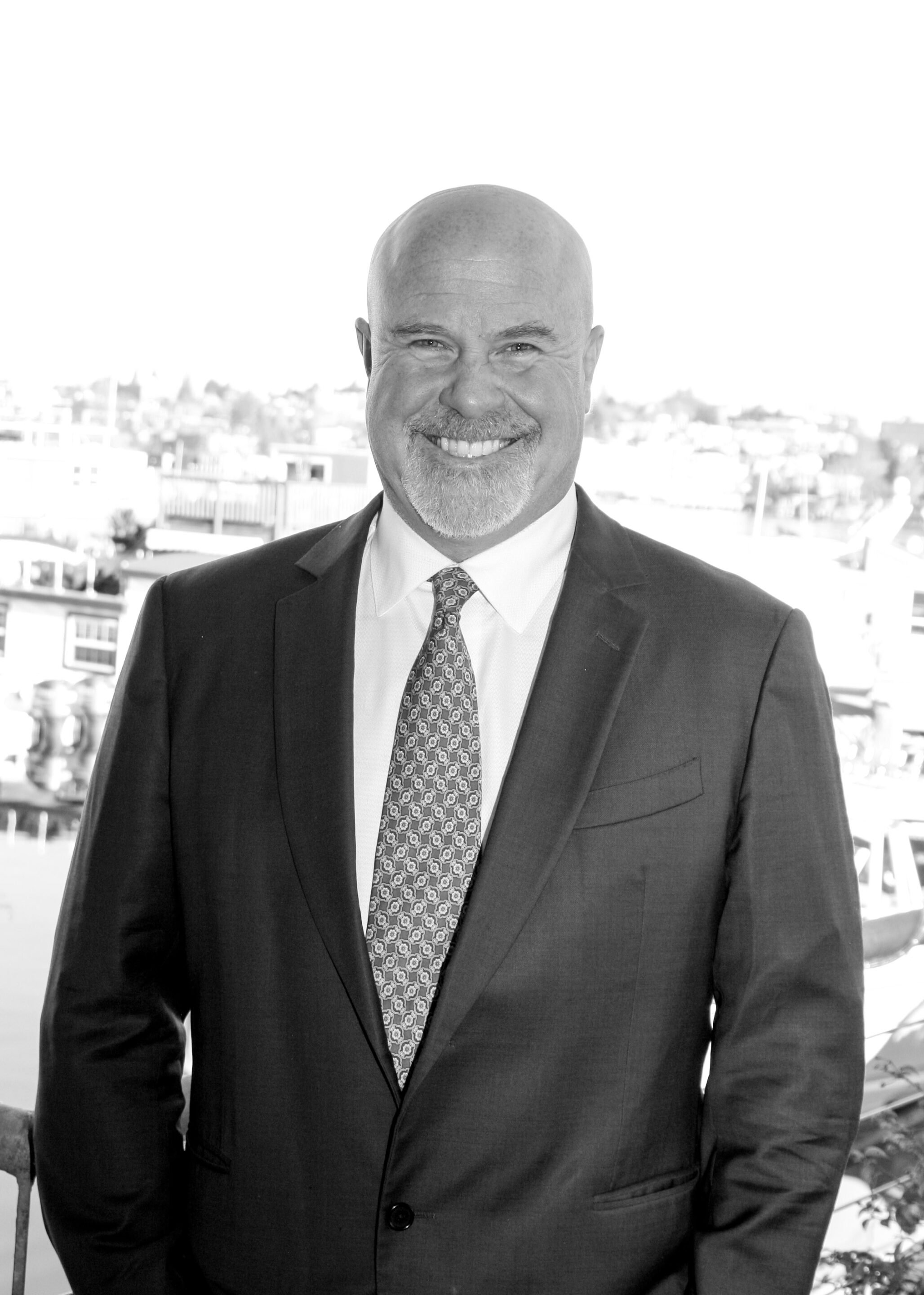
 

Thomas Lether

Thomas Lether

Founder and Managing Shareholder.

Thomas Lether is a graduate of the University of Puget Sound and the University of Puget Sound Law School. He has been involved in insurance and commercial litigation since 1988. Mr. Lether’s primary clients include numerous National and International insurance companies, several smaller insurers and independent adjusting firms. He also represents a number of contractors, property owners, and business owners. His practice predominantly involves the representation of insurance companies and individuals in the investigation, adjustment and defense of complex coverage matters.

 

THE WASHINGTON STATE SUPREME COURT WEIGHS IN ON COVID-RELATED BUSINESS INTERRUPTION CLAIMS

As insurance professionals and insurance lawyers are aware, Washington State is historically one of the most liberal jurisdictions in the country. This has often led to decisions and rulings that favor policy holders. However, on August 25, 2022, the Washington State Supreme Court issued a decision finding that COVID-19 related business income losses are not covered under standard commercial property insurance policies.  Hill & Stout, PLLC v. Mutual of Enumclaw Insurance Company, Cause No. 100211-4.

Hill & Stout is a Washington dentistry practice.  When the COVID-19 pandemic first arose in the State of Washington, Governor Jay Inslee declared a state of emergency and issued multiple proclamations relating to public health and safety, including a proclamation prohibiting all non-emergent dental procedures.  In light of the emergence of COVID-19 and the governmental and societal response thereto, Hill & Stout joined thousands of businesses in Washington and around the country in seeking Business Interruption coverage under its commercial property policy.

Mutual of Enumclaw (MOE) denied Hill & Stout’s claim effectively for two reasons.  First, the business income loss coverage is triggered only where there is “direct physical loss or damage” to the insured premises.  Second, the MOE policy contained an exclusion for any losses caused by a virus.  Hill & Stout sued in the King County Superior Court.

Since the inception of the global pandemic, thousands of lawsuits relating to business income loss coverage have been filed by businesses seeking to recover their losses.  The courts around the U.S. have been nearly universal in finding that there is no coverage for these claims.  In fact, as Lether Law Group has previously reported, the United States District Court for the Western District of Washington has previously ruled in favor of insurers on these claims.  Germack v. The Dentists Insurance Company, W.D. Wa. Cause No. 2:20-cv-00661-BJR.

However, until Hill & Stout, the highest court in the State of Washington had not fully and finally resolved the issue in this jurisdiction.  In Hill & Stout, the Supreme Court found that there is no coverage for COVID-related business losses because the virus and the governmental proclamations related thereto do not cause direct physical loss or damage to the insured premises.  The insured had focused their argument on the claim that they had a “loss” of the business.  The Supreme Court rejected that argument finding that the loss was not “physical”.

The Court went on to find that the efficient proximate cause of the business losses was not the governmental response to the virus, but the virus itself.  As a result, the Court held that the virus exclusion would operate to preclude coverage, even if there was a direct physical loss.

Lether Law Group represents multiple carriers in Washington and in jurisdictions around the United States in COVID-related business income loss claims.  This includes the Germack case referenced above. If you would like to speak with us regarding these or any other claims, please contact us at any time.


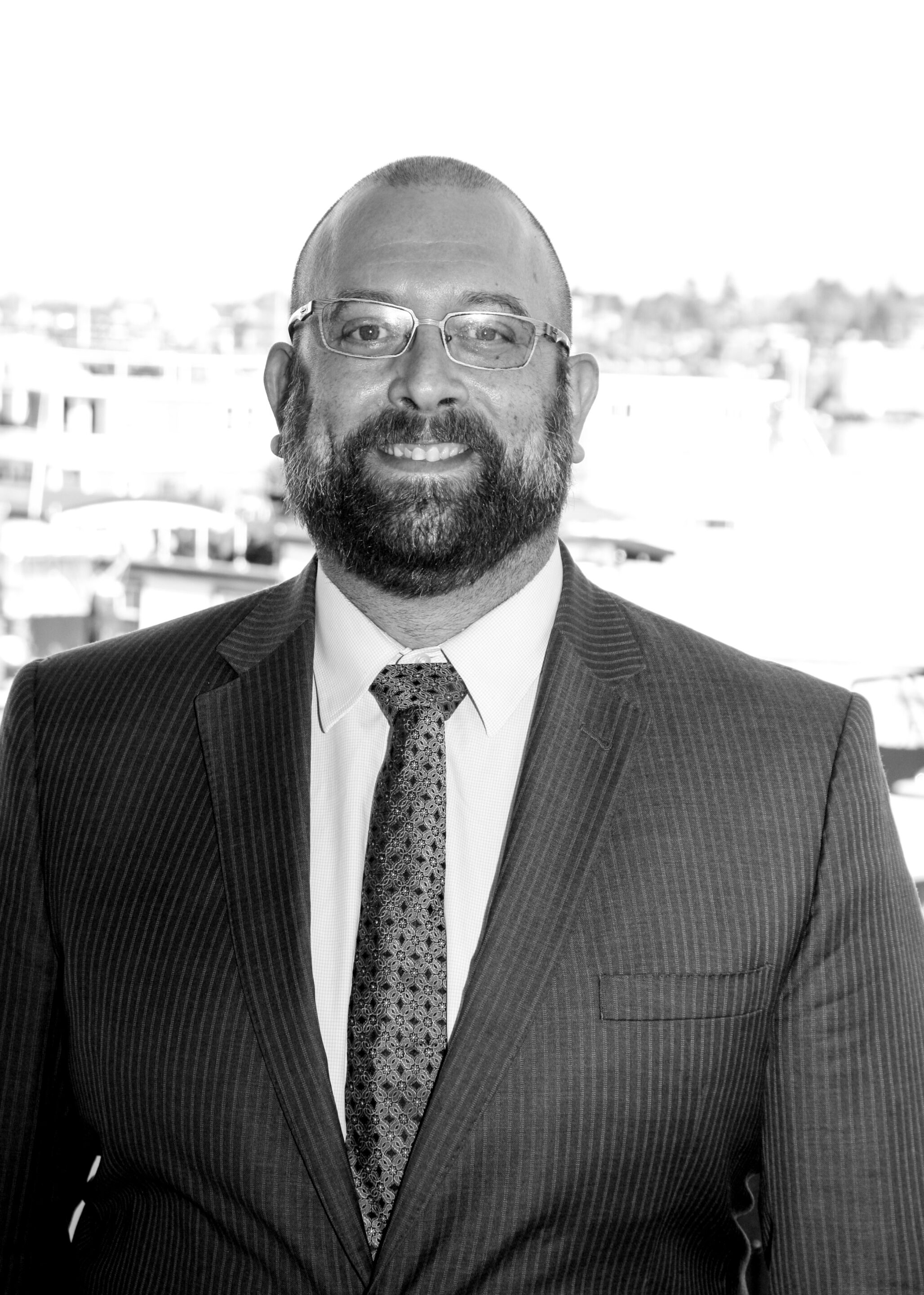
Kevin J. Kay

Kevin J. Kay

Shareholder

Kevin is a graduate of Pacific Lutheran University and Seattle University School of Law. He is licensed to practice in the state and federal courts of Washington and admitted to practice before the Ninth Circuit Court of Appeals. In addition, Kevin has appeared pro hac vice in courts in Louisiana and California. Kevin has represented insurers and insureds in coverage for 16 years. These claims involve personal and commercial auto policies, commercial general liability, professional liability, and E&O insurance. Kevin has also advised and represented risk pools, insurers, and insured in matters ranging from automobile/bus accidents to catastrophic landslides. His practice also includes construction defect disputes, personal injury claims, commercial leases, and significant property damage disputes.


THE WASHINGTON STATE SUPREME COURT OVERRIDES A LIABILITY POLICY ON PUBLIC INTEREST GROUNDS

In a recent decision, the Washington State Supreme Court certified a question from the Western District of Washington in Preferred Contractors Insurance Company, Risk Retention Group, LLC v. Baker and Son Construction, Inc. The Court was asked whether a contractor’s liability insurance policy violated Washington public policy.  The certified question was as follows:

When a contractor’s liability insurance policy provides only coverage for “occurrences” and resulting “claims-made and reported” that take place within the same one-year policy period, and provide no prospective or retroactive coverage, do these requirements together violate Washington public policy and render either the “occurrence” or “claims-made and reported” provisions unenforceable?

The Court answered the question in the affirmative, finding that the particular insurance policies at issue violated public policy.

 In the case at hand, the insured was a contractor renovating a hotel. There was a serious injury on the site which resulted in death. The incident occurred on October 31, 2019, during the first policy period. Notice of a potential wrongful death claim was given to the insured on September 23, 2020. The insured notified its carrier on September 25, 2020, during the second policy period.

The carrier denied coverage, at least in part because the occurrence and reporting dates did not occur during the same policy year. The policies at issue provided there was no continuous coverage between renewed policies. The policies were non-retroactive, meaning the retroactive date was set to the first day of each policy.

The Court relied upon RCW 18.27 to outline the public policy at issue.  This statute, in part, requires a contractor to either have insurance or the ability to cover $100,000 for injuries or damage.  This is a prerequisite for registration with the state,  Here, the Court found that the state had an interest in ensuring that contractors are financially responsible for losses caused by negligence, and that insurance is the primary means for ensuring this financial responsibility.  In the eyes of the Court, this interest outweighed the parties freedom to contract. Specifically, the Court stated as follows:

We are mindful that parties to insurance contracts generally should have the freedom to contract. But when the legislature orders contractors to bear financial responsibility for the injuries their negligence may cause and dictates insurance is the preferable method to comply with this mandate, we cannot enforce insurance provisions that render coverage so narrow it is illusory. …insurers should not issue policies that essentially cause contractors to default on their statutorily mandated financial responsibility.

This ruling is limited to narrow, claims made policies.  However, insurance carriers will need to be mindful if they are issuing policies with coverages that may fall short of the financial responsibility laws in a particular state.          

Lether Law Group currently represents multiple insurers in coverage litigation in state and federal courts in a number of states and has experience navigating complex issues such as the one presented here.  If you have questions about the implications of this case or general questions in regard to pending insurance claims, please feel free to contact our office.

Tom Lether

Tom Lether

Founder & Managing Shareholder

Thomas Lether is a graduate of the University of Puget Sound and the University of Puget Sound Law School. He has been involved in insurance and commercial litigation since 1988. Mr. Lether’s primary clients include numerous National and International insurance companies, several smaller insurers and independent adjusting firms. He also represents a number of contractors, property owners, and business owners. His practice predominantly involves the representation of insurance companies and individuals in the investigation, adjustment and defense of complex coverage matters.

 

April Showers Bring May Flowers — AND BABY GEESE!

For the 6th year in a row, once spring rolls around, a familiar Mother Goose returns to the back deck of Lether Law Group, where she lays her eggs. This year, Mother Goose laid six eggs in one of our gardening boxes on the back porch.

For weeks, the Lether Law Group team witnessed how tenderly Mother Goose cared for her 6 eggs. Sometimes, the Lether Law Group team would also witness Father Goose swimming from a short distance, making sure that no hunter or gatherer posed a threat to his growing family.

On May 15, 2022, Mother Goose and Father Goose officially became the happy parents of 6 little goslings. The little hatchlings, pictured below, are brightly colored yellow with a hint of green.

The next time you paddleboard, kayak, or take your boat around South Lake Union, keep a look out for these little ones. Happy Spring!

Appellate Practice Tips

Lether Law Group is engaged in appellate practice across multiple jurisdictions including multiple State Courts of Appeals and the Federal Circuit Courts of Appeal. As any experienced insurance defense litigator knows, a win at the trial level for your client is often not the end of the story. Accordingly, in this week’s newsletter, our office will share some helpful practice pointers we have gained through our litigation in the various Courts of Appeals.

            A Complete Record - The first and most essential step in any appeal is assuring you and your client have the complete trial court record. While seemingly elementary, effective appellate advocacy starts with a complete underlying record. Once the Appellant has designated the clerks’ papers and statement of arrangements, and prior to receiving a copy of those clerks’ papers, proactively cross reference opposing counsel’s designation with the trial court docket. If any relevant pleading is absent, or any potentially relevant pleading is absent from opposing counsels designated clerks’ papers, move to supplement the clerk’s papers. Failure to do so will foreclose an appellate attorney’s ability to argue a potentially relevant issue or procedural aspect before the appellate court.

           Comprehensive Legal Briefing – There is a natural tendency in appellate practice to rely partly upon the briefing at the trial court level because the issues in question were fully litigated. However, it would be an error to rely on the underlying briefing and assume it is sufficient for a review by the Court of Appeals. Rather, effective appellate practice requires a total reassessment of the underlying case from the facts as plead to the citations relied upon by the parties. The loadstar for any appeal is the standard of review. A de novo review by the Court of Appeals will requires a total reevaluation of the underlying case in a manner that a review for abuse of discretion might not. Further, the caselaw relied upon by the parties at the trial court level may have changed in the time since the trial court’s decision and should always be verified as to the holdings they purport. Accordingly, the process of drafting an appeal often requires a ground up reassessment of the facts and law surrounding the trial court’s decision.

            Patience – Appeals take time. The average lifespan of an Appeal is 18 to 24 months. Even after the Court of Appeals receives all briefing from the parties, it will often take 6 to 10 months or more to render a decision on the matter. Given this expansive timeline, it is helpful to communicate reasonable expectations to your client about the resolution their appeal. Further, it is essential to communicate with the client periodically throughout this time to inform them you are monitoring the matter throughout the lengthy appeals process.  

            Lether Law Group currently represents clients in multiple jurisdictions for their appellate matters. For questions regarding acute appeals State Courts of Appeal or the Federal Circuit Courts of Appeal, please feel free to contact our office.

Chris Kranda

Chris Kranda

Associate Attorney

Born and raised in the pacific northwest Chris attended Seattle University’s Matteo Ricci College where he graduated cum laude with a bachelor’s degree in Humanities. He remained in the area and earned his Juris Doctor Seattle University School of Law.

During law school, Chris externed in US District Court for the Western District of Washington for the Honorable Robert S. Lasnik, and later worked as a Rule 9 prosecutor before joining the King County Prosecutor’s Office as a Deputy Prosecuting Attorney. He served in District Court and Violent & Economic Crime Units from 2019 to 2021 before joining Lether Law Group to begin his civil practice.

In his free time, Chris enjoys camping, fly fishing, and road trips.