1-206-467-5444 info@letherlaw.com

Wintertime Property Claims

It is the Season. Not just for the Holidays but also for winter storm property damage claims.

The volume of commercial and homeowner property claims typically increase during the winter months. This is due in large part to winter weather conditions. The typical types of winter claims include:

Frozen Pipe Claims: Exposed pipes will freeze. These types of claims trigger language in almost all property policies, including coverage and exclusions involving claims arising from the sudden accidental failure of plumbing systems due to freeze conditions. Typically, the policy language requires the building owner to take precautions to drain water lines or prevent against such freezing in order to have coverage.

Storm Drain Backup Claims: Heavy rains or snow melt can lead to storm drain back ups and flooding. These claims are typically covered but may be subject to a specific and lower policy limit.

Wind Driven Rain Claims: Particularly for those who live in the Northwest, we are used to heavy periods of rainfall often accompanied by strong wind conditions. A typical wind-driven rain claim may involve sudden and accidental leakage into a building as well as long-term water and decay damage. In Washington, wind-driven rain claims may be covered in the absence of weather exclusionary language.

Wind Claims: Winter storms usually bring high wind conditions. This can result in the failure of power utilities, downed trees, roof damage, etc. Depending on the policy language, these types of claims are typically covered.

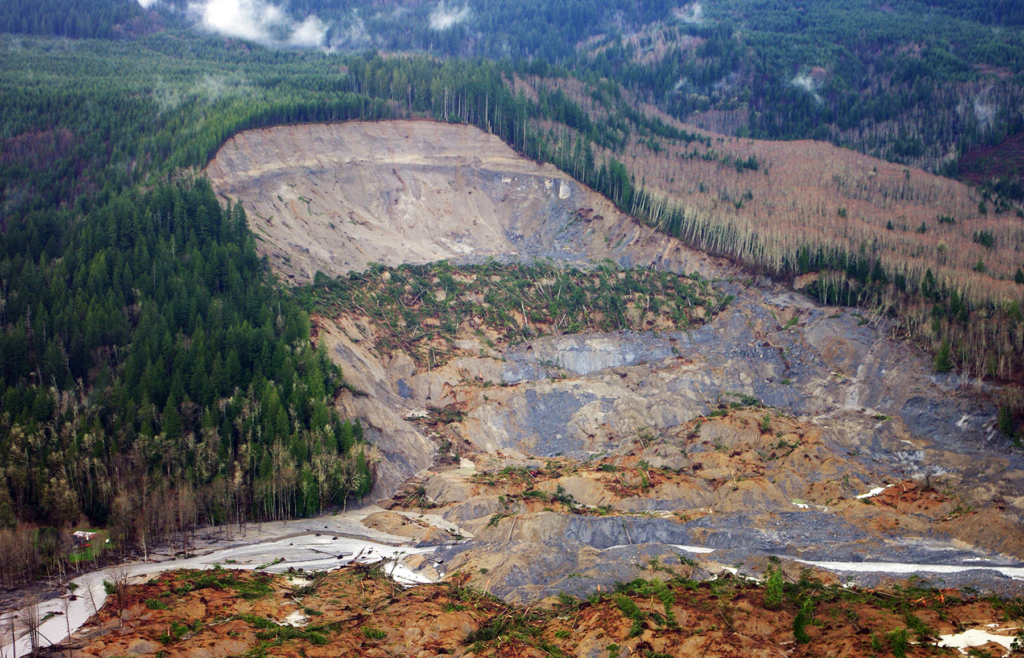
Landslides: Heavy rainfall and wind conditions can contribute to saturated soils. This often results in landslides, particularly in the Northwest. Landslide events are typically excluded from coverage unless landslide coverage is expressly provided for.

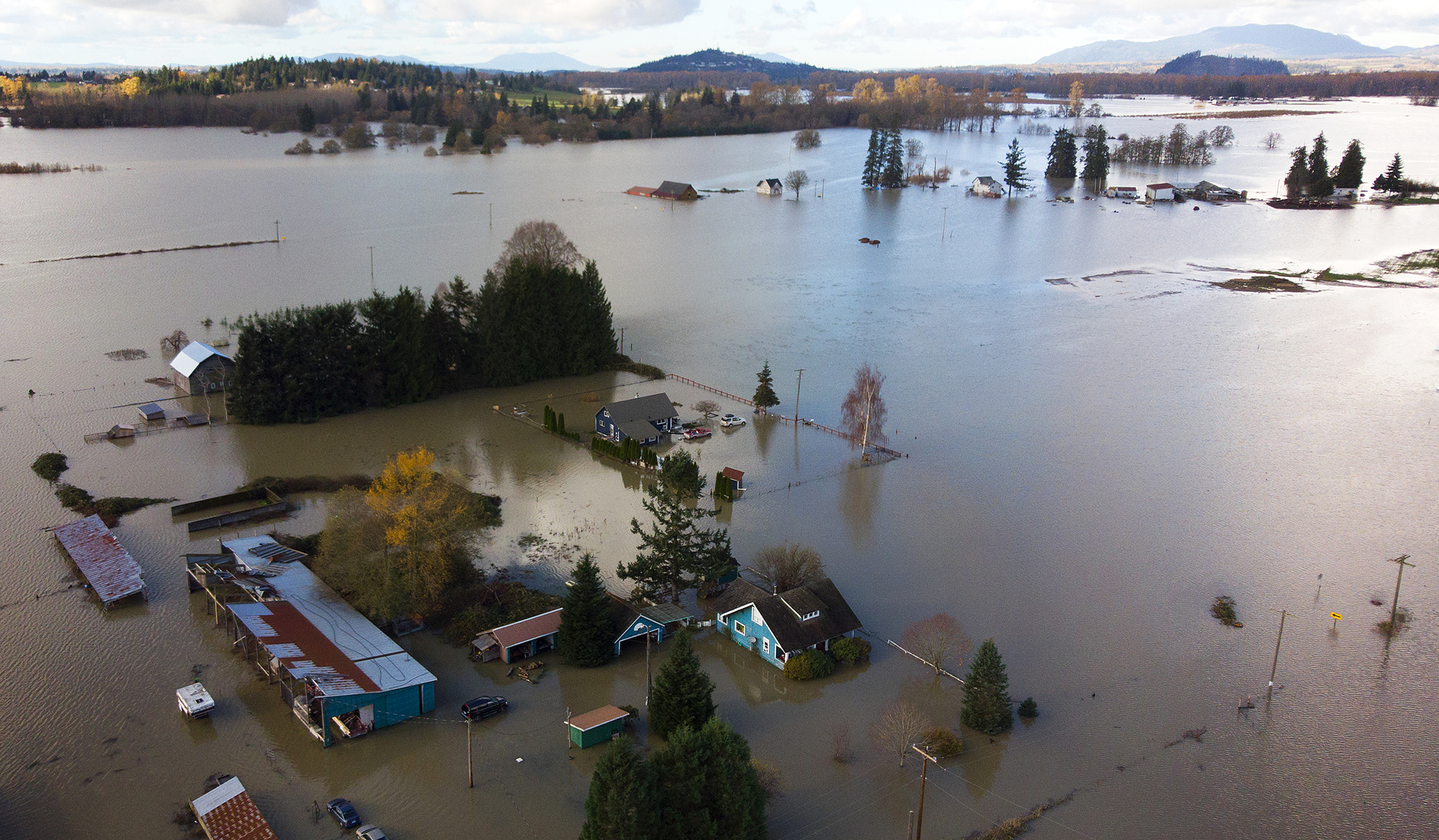
Flood Claims: Heavy rainfall and snowmelt can lead to both river and tidal flooding. In addition to river overflow, strong King tides can result in oceanic saltwater flooding from tidal bodies of water. In the absence of express flood coverage, most surface water and floodwater claims are excluded from coverage. If a building owner has flood insurance, that insurance is typically paid by an insurer through the Federal Emergency Management Agency (FEMA) under the National Flood Act. There are severe restrictions on what is allowed to be recovered under the National Flood Insurance Act. For example, in a FEMA flood claim, there is no right to policy appraisal, no right to trial by jury, and no recovery of extra contractual or bad faith claims.


Once again, every policy is different. However, those building owners who are confronted with severe winter weather should review their policies and understand what is and what is not covered.

Lether Law Group has handled winter storm-related claims throughout the Northwest. This includes major catastrophes such as the Oso landslide, the Skagit River valley flooding, the Kingston and Perkins Lane landslide losses, and thousands of water intrusion and wind-driven rain type claims. Tom Lether has been directly involved as counsel retained through FEMA to litigate claims involving flood losses under the National Flood Insurance Act.

If you have questions in regard to winter storm damage claims, please feel free to info@letherlaw.com or (206) 467-5444.


Happy Thanksgiving from Lether Law Group

We are thankful for all of our clients, friends, and family! We hope everyone has a safe and wonderful holiday weekend.

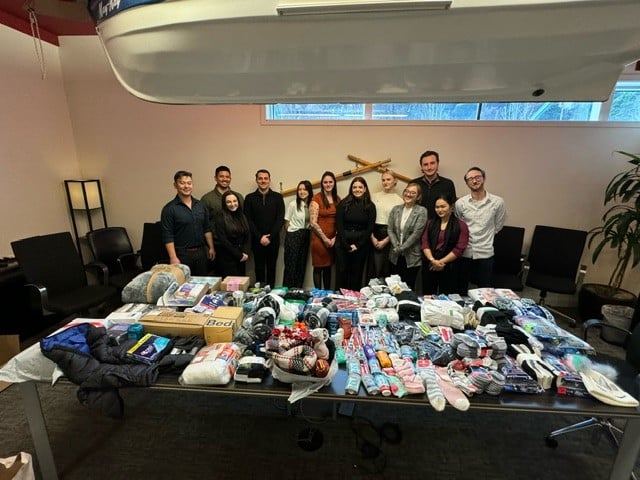
In honor of the Thanksgiving spirit, a time of unity and gratitude, it’s crucial to support those in need. Since November 1st, Lether Law Group has been actively involved in a charity drive, focusing on essential items like blankets, sleeping bags, and toiletries. These vital supplies, collected from the generous contributions of our community and our employees, are set to benefit the Queen Anne Helpline. This organization is dedicated to assisting individuals facing hardships. We are committed to making a significant impact by providing these necessary items to those who need them most. To join us in this cause and make a difference, please visit the Queen Anne Helpline’s website at www.queenannehelpline.org for more information on how you can contribute.

In observance of the Thanksgiving holiday, our office will close at 12:00 PM on Wednesday, November 22nd, and will reopen for normal business hours on Monday, November 27th.

Lether Law Group Hosts the 2023 IAPL Annual General Meeting in Washington D.C.

The International Association of Practicing Lawyers (IAPL) is a select group of attorneys representing countries throughout the world.

For several years, Tom Lether has been the representative of the United States at the semiannual meetings. The IAPL presents an excellent networking opportunity for lawyers from multiple countries. More importantly, it provides an opportunity for lawyers with different cultural, religious, and geographic backgrounds to come together and discover that they all have common interests and goals. The ability to learn about legal systems around the world and exchange information in a collegial fashion with other lawyers provides incredible insight into international law.

In addition, the IAPL has become a true family of lawyers. Bonding over dinner, discussing history, politics, and legal systems in various parts of the world is an incredible experience.

This year’s 2023 IAPL annual general meeting was hosted by Lether Law Group in Washington, DC. It is the first time the IAPL has held their annual meeting in the United States for a number of years.

Washington, D.C. was a perfect setting for the IAPL. Members had an opportunity to bond over long walks to and from Georgetown, enjoy fantastic meals, experience an excellent guided tour throughout the major sites of Washington, D.C., and take a trip to the inner sanctum of the United States Supreme Court. Along the way, there were day visits to places like Alexandria and Arlington National Cemetery.

This year’s keynote speaker, Tom Lether, presented a seminar on the American legal and governmental systems, with a specific focus on the history of the debate between states’ rights advocates and those in favor of a centralized Federal Government. This presentation also discussed the never-ending dispute over how to interpret the Constitution.

This speech was presented in the context of American history and the American Civil War. Along the way, members were introduced to how these legal concepts have recently impacted the Supreme Court’s decisions in cases like the Dobbs v. Jackson decision that was cited in our newsletter.

Tom’s presentation sparked a lengthy discussion among the members about American politics and history, which underscored the importance of the IAPL organization. A link to a written version of Tom’s speech is below:

For anyone interested in the IAPL, we also invite them to follow the link below to learn more about this truly fantastic organization:

Washington Landlords and Tenants: Remaining COVID-19 Eviction Protections Lifted

The National Response to COVID-19: A Brief Overview

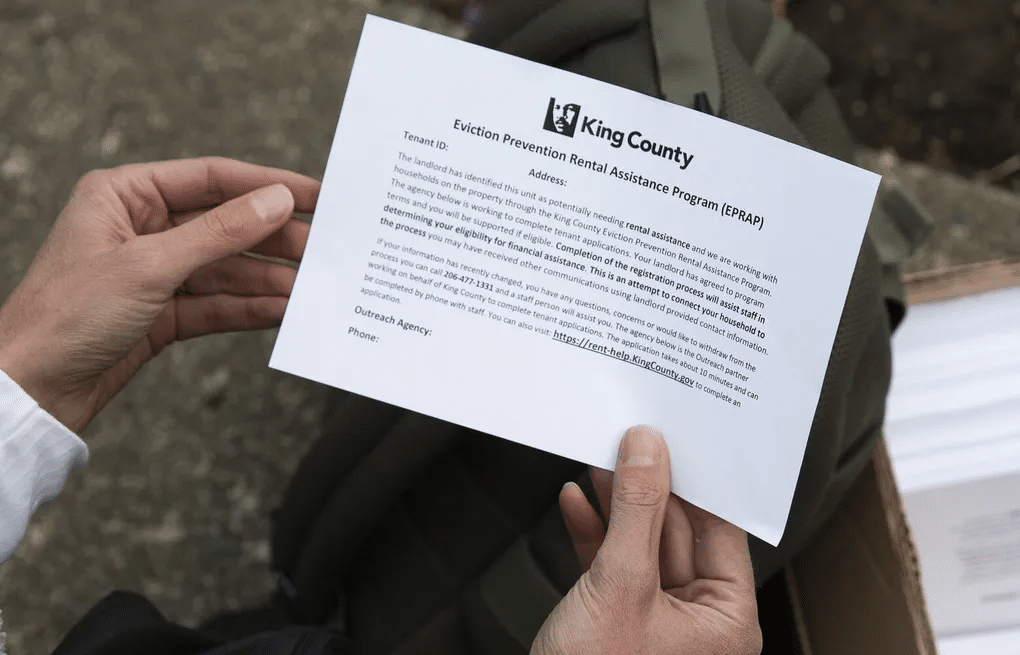
In early 2020, the nation was in a state of emergency due to the COVID-19 pandemic. Recognizing the risk of mass evictions as a result of the pandemic, many state and local governments enacted a moratorium on residential evictions. These moratoria effectively denied landlords the right to pursue an unlawful detainer (eviction) action – the only legal means of removing tenants for failure to pay rent.

Washington State’s Eviction Moratorium and the ERPP Initiative

In Washington state, an eviction moratorium was in effect from March 18, 2020, through October 31, 2021. Following the end of the moratorium, the Washington state legislature passed E2SSB 5160 authorizing the establishment of an Eviction Resolution Pilot Program (ERPP) in any county in Washington state. The ERPP was designed to facilitate dispute resolution between landlords and tenants, by connecting them with a dispute resolution specialist and resources such as rental repayment assistance. Once the eviction moratorium ended on November 1, 2022, six counties in Washington state elected to participate in the ERPP: King, Pierce, Snohomish, Clark, Spokane, and Thurston. Each program established a local Dispute Resolution Center (DRC) and operated pursuant to a standing order issued by the local superior court.

Pursuant to the ERPP, landlords in participating counties were required to provide tenants with an ERPP Notice, advising tenants of their rights under the ERPP, and a proposed repayment plan for outstanding rent amounts owed. Upon receiving an ERPP Notice and proposed repayment plan, tenants had 14 days to negotiate a proposed settlement with their landlord via the local DRC. In circumstances where the landlord and tenant failed to come to an agreement during the 14-day period, or the tenant breached the agreement, the landlord was then authorized to send the tenant a 14-day notice to pay or vacate.

The End of ERPP and Its Impact

The ERPP ended by statute on July 1, 2023. Dispute Resolution Centers statewide reported that over 78,000 cases were closed and completed during the life of the program, and 73% of these cases closed because the landlord and tenant reached an agreement. Now that the program has ended, landlords are no longer required to provide tenants with an ERPP Notice or a proposed repayment plan before proceeding with an unlawful detainer for unpaid rent.

The end of the ERPP marks the end of all remaining COVID-19 eviction protections for tenants. However, some counties in Washington state still maintain permanent eviction moratoriums during parts of the year. In Seattle, City Council Ordinance 126041 creates a defense to eviction for tenants who would have to vacate their housing between December 1 through February 28 each year. Additionally, Seattle City Council Ordinance 126369 creates a defense to evictions for anyone in school, with children in school, or working at a school during the City of Seattle Public school year, which is generally the beginning of September through mid-June.

Need Legal Assistance? Contact Lether Law Group

Lether Law Group has attorneys licensed and actively participating in eviction proceedings in Washington state. To the extent that you have any questions about Washington landlord-tenant law or eviction moratoria, please feel free to contact us by phone at (206) 467-5444 or via email at info@letherlaw.com.

Construction Defects In Tropical Environments

Building failures can result from a number of causes. A failure can be explained as much by weather as bad construction. For example, ice dams resulting in water and roof damage are common in colder regions. As a result, it is essential to be aware of the interaction between construction deficiencies and the environment in order to address weather-related failures.

The takeaway in many instances is that certain types of construction do not work in certain weather conditions. This is readily apparent in the tropics. For example, wood frame structures are subject to failure in regions of high heat, rain, and humidity. Steel or concrete construction is preferable.

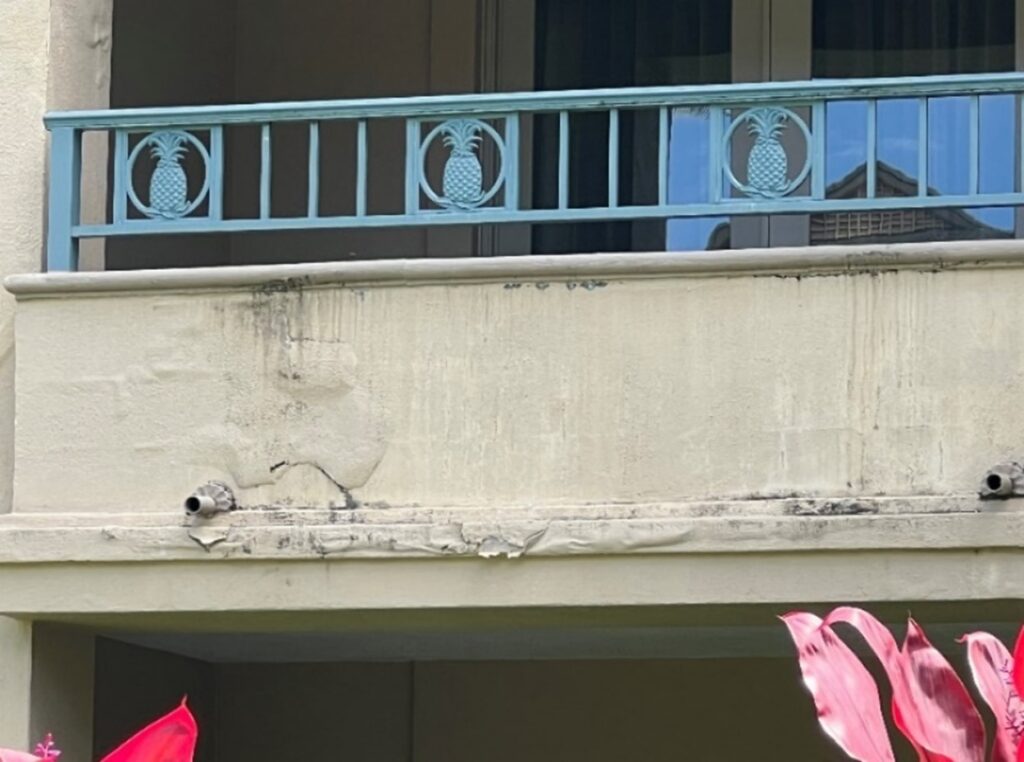
Another example is the improper use of stucco in a tropical green environment. Exposure to marine air, salts and elevated temperatures can cause effervescence in stucco and concrete requiring the replacement of the entire building envelope.

Stucco corrosion of property in Hawaii due to exposure to marine and high temperatures

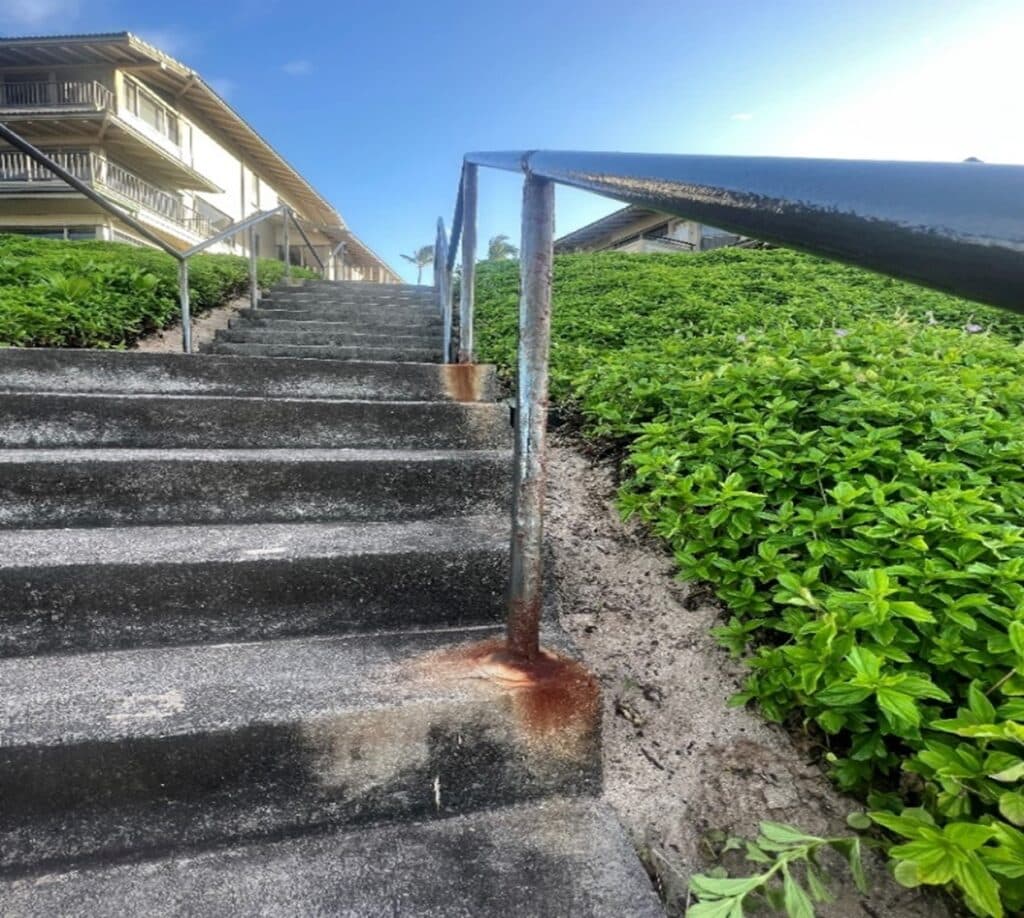
Another everyday exposure in tropical climates is marine oxidation of exterior metal. Systems such as window frames, window door frames, and metal hardware exposed to salt, marine air and high heat routinely corrode. Finally, temperature inversion, the relationship between hot outside air and interior air cooled by air conditioning and HVAC systems can lead to numerous defects.

For all these reasons, it is essential to consider what building materials and types of construction should be used in tropical conditions.

Lether Law Group’s Hawaii Office Is currently involved in several construction defect matters in Hawaii. We are proud to have several attorneys born or raised in Hawaii and licensed to practice there.

Lether Law Group has the advantage of over 35 years of construction insurance coverage and litigation experience, coupled with local know-how and an affinity for Hawaii.

If you are involved in any construction claims in Hawaii or other tropical zones, feel free to contact us with any questions.

WASHINGTON COURT OF APPEALS WITHDRAWS OPINION ADDRESSING THE INSURANCE FAIR CONDUCT ACT IN THE CONTEXT OF UM/UIM INSURANCE

 As noted in a previous newsletter, Division Two of the Washington State Court of Appeals issued an opinion on April 19, 2022 in Beasley v. Geico General Insurance Company and Aaron Yaws, No. 54997-2-II, which addressed the meaning of the term “actual damages” under the Washington Insurance Fair Conduct Act (IFCA), RCW 48.30.015 and holding that the term “actual damages” includes noneconomic damages. Beasley v. Geico General Insurance Company and Aaron Yaws, No. 54997-2-II.  The unpublished part of the opinion also addressed the issue of tendering “undisputed” amounts in the context of UM/UIM claims, which had not been addressed in prior case law in Washington.

 Last week, The Court of Appeals withdrew the Beasley opinion in response to a Motion for Reconsideration filed by GEICO. The Order granted the Motion for Reconsideration in part, withdrew the earlier opinion, and advised that a revised opinion would be filed.  To date, the revised opinion has not yet been issued. As a result, there is no information regarding which portion of the prior opinion has been reconsidered. Nevertheless, and as a result of the withdrawal, the earlier Beasley opinion is no longer good law and should be disregarded by insureds and insurers alike. 

Lether Law Group currently represents multiple insurers in coverage litigation in state and federal courts in Washington involving claims under IFCA. If you have questions about the implications of Beasley or general questions in regard to pending insurance claims and compliance with Washington insurance law, please feel free to contact our office.


Ellen Mcgraw

Ellen Mcgraw

Associate Attorney

Meg is from Oklahoma City, Oklahoma. She received a bachelor’s degree in Environmental Sustainability from the University of Oklahoma, where she graduated with honors. She went on to receive her Juris Doctor from Lewis & Clark Law School, graduating cum laude. Before joining Lether Law Group, Meg served as a judicial extern for the Honorable Chief Judge Marco A. Hernández in the U.S. District Court for the District of Oregon.