by Kerri Lether | Mar 20, 2020 | Insurance Law, Misc., News & Updates
In the mere days since our last newsletter, the social and economic impacts of the COVID-19 outbreak have undergone several seismic shifts. Lether Law Group is continuing to monitor the situation in order to develop swift and accurate responses to any questions that might arise regarding this unprecedented event. We encourage any clients or friends-of-the-firm who may have any questions or concerns to call or write at any time.
The following is a brief update on some of the issues that we are tracking:
Court Access
Virtually every court in the Pacific Northwest is operated on some measure of restricted access. Here are a couple of specific updates.
The state courts in Oregon have been ordered by the Oregon Supreme Court to move to Level 3 restrictions, which effectively means that all civil trials are indefinitely continued.
The Spokane County Superior Court in Washington has ordered that all hearings will be conducted telephonically. However, at this time there is still not anything on the Court’s website providing further information.
The Los Angeles County Superior Court, the largest court system in the nation, is currently closed entirely and is not scheduled to reopen until Friday, March 20, 2020. It is our understanding that when LA County reopens, it will be on a limited basis.
Again, nearly every court system that we are aware of is experiencing some level of disruption in service. We encourage anyone with a pending matter to review your court’s website or contact the court directed before going to court.
Property Insurance – Business Income Loss
One of the questions that we have been asked to address for several clients is whether there might be Business Income coverage available under first-party property policies to cover losses associated with the widespread closures and disruptions due to governmental directives to close or restrict business.
“Business Income” coverage provided benefits for income that a business loses due to a necessary suspension of operations caused by direct physical damage to the insured premises.
The Washington Courts have addressed this coverage and have held that Business Income benefits are only available if (1) the business actually ceases all operations, and (2) the lost income was directly caused by physical damage to the insured premises. Keetch v. Mut. of Enumclaw Ins. Co., 66 Wn. App. 208, 831 P.2d 784, 1992 Wash. App. LEXIS 266.
As a result, we would not anticipate that there would be too many scenarios in which the Business Income coverage is implicated for lost revenue caused by the COVID-19 outbreak. In situations where a business has decreased revenue due to its efforts to comply with governmental directives or merely due to less customer traffic, the coverage would not apply because there is not a necessary suspension of all operations. Moreover, even where a business is forced to close, whether voluntarily or at governmental direction, that closure will likely not be caused by any direct physical damage to the insured premises.
However, we are aware of one lawsuit that has already been filed seeking Business Income coverage in the context of a restaurant closure. Cajun Conti, LLC v. Certain Underwriters at Lloyd’s, London, et. al., Civil District Court for the Parish of Orleans, Louisiana. In Cajun Conti, the restaurant claims that the property itself is contaminated with the COVID-19 virus. Thus, the restaurant claims that the closure was in fact a necessary suspension of operations due to “physical damage” to the property. This lawsuit was just filed on Monday, March 16, 2020. We will provide updates as information about this lawsuit becomes available.
One other note on this coverage is that modern policy forms may contain a virus or pathogen exclusion that could operate to preclude coverage even where there is a necessary suspension of operations due to physical damage to the property. In addition, many property policy forms will include an exclusion for losses caused by the acts or decisions of a governmental entity.
As always, for any claim the policy should be thoroughly reviewed for any and all terms, conditions, limitations, and exclusions that may be implicated.
Finally, on federal, state, and local levels, there are a number of governmental entities initiating emergency measures to assist businesses that have closed or are otherwise have been affected. We anticipate that a number of jurisdictions will begin requiring insurers to provide relevant governmental agencies with information concerning the availability of Business Interruption coverage even without any claims having been made. The New York Department of Financial Services has already ordered all property/casualty insurers providing insurance in the State of New York to provide the Department with an explanation for the potential coverage relating to COVID-19. Specifically, the NYDFS Order requires the following:
Insurer must provide NYDFS with information regarding the volume of business interruption coverage that the insurer has written, that has not lapsed as of March 10, 2020, including the amounts of direct premiums, policy types, and number of policies for each type.
Examine all policies and “explain the coverage each policy offers in regard to COVID-19.”
Prepare a clear and concise explanation of benefits suitable for policyholder review.
Send the explanation of benefits to all policyholders and to NYDFS with a certification that the explanation has been sent to all insureds.
Again, we expect other states to follow New York’s lead on this issue.
Third-Party Liability Coverage – Lawsuits Against Governmental Bodies
Several of our clients insure governmental bodies, whether directly or by participation in municipal risk pool coverage. We anticipate that the COVID-19 outbreak and the governmental response thereto will result in a substantial number of lawsuits against federal, state, and local governmental entities that individuals or entities may view as culpable for the spread of COVID-19 or for the financial impacts associated with the response to the outbreak.
In times of emergency declaration, the government’s powers are sharply increased and many of these types of lawsuits may be barred by the doctrine of sovereign immunity or by the statutes allowing for expanded governmental power in times of emergency.
From an insurance coverage standpoint, however, these types of claims will present multiple complex issues that may impact the coverage picture. For instance, under a general liability type coverage, would a governmental decree requiring the closure of a business qualify as a covered “occurrence” or “event’ as those terms are defined in the relevant policies? Or might the coverage be more properly addressed under a broad “wrongful acts” type coverage?
For any of our clients or friends that would like to discuss the coverage implications surrounding potential claims against governmental entities, please feel free to contact us at any time.
A Word of Thanks
Lether Law Group is acutely aware of the massive social, financial, and cultural disruption that this outbreak has caused. We truly wish everyone the best in these trying times and we thank all of our friends, colleagues, clients, and acquaintances for all of the support that we have received. We truly cherish all of our relationships.
As always, if there is anything that you would like to discuss about these or any other issues, please feel free to contact Lether Law Group at any time.
by Kerri Lether | Mar 13, 2020 | Insurance Law, Misc., News & Updates
The coronavirus (COVID-19) pandemic has caused a significant health crisis throughout the world. The health concerns and public response to this catastrophe have been overwhelming. The potential economic impact of this crisis has yet to be fully addressed.
At Lether Law Group we are actively reviewing a number of potential legal and insurance related issues which will develop as a result of this ongoing situation. This includes analyzing the impact the virus will have on worldwide financial markets, the local impact on businesses and jobs, and the implication that this situation will have on our insurers and private clients.
Obviously, this is a rapidly changing and developing environment and we are working to stay on the forefront in identifying potential issues and developing a response to emerging issues for our clients. A number of issues have already been identified. For example, what are the potential coverage issues involving claims for business interruption or arising out of acts of decisions of government agencies to shut down transportation, service or public events? Additional issues arise in regard to the potential coverage for business interruption losses arising out of breach of contract claims and other transactual litigation which clearly will develop as a result of businesses and individuals retracting from ongoing financial obligations and business arrangements. Concerns have also arisen regarding potential liability and coverage issues for healthcare professionals and first responders that are on the frontlines of the fight against COVID-19.
We are also assessing the potential liability and coverage issues that might arise from accidental exposure to COVID-19 in the workplace and public at large. Finally, we are also working to address the significant issue involving available health benefits under public and private health insurance plans associated with medical care for COVID-19 infection.
One thing is definitely clear, this health crisis will not be going away any time soon and will continue to impact the economy and the insurance markets for the foreseeable future. In fact, the impacts are already affecting large portions of our society, with the cancellation of nearly every major sporting event, festival, concert, and other public gathering. The crisis is also dramatically impacting our courts. The following is a brief summary of what we know so far:
Pursuant to General Order 01-20, signed by Chief Judge Ricardo Martinez on March 6, 2020, all trials in the United States District Court for the Western District of Washington are continued indefinitely. The Court remains open, but there will be no hearings or trials. The Order will be vacated or amended on or before March 31, 2020. We anticipate that the Order will be extended at that time.
On March 4, 2020, Chief Justice Debra Stephens of the Washington State Supreme Court issued an Emergency Order allowing the Superior Courts and intermediate appellate courts to “adopt, modify, and suspend” the court rules or orders as warranted to address the crisis.
The King County Superior Court has suspended all personal appearances for oral argument on contested motions. We are also advised that although there is no formal Order at this point, there will be no civil trial in King County for a minimum of 2-3 months.
The Pierce County Superior Court will continue to hold trials and hearings, but it appears that decisions on whether to go forward are being placed in the discretion of each judicial department. Practitioners are being encouraged to contact the judicial assistant in their assigned department to inquire as to the status of pending matters.
The Snohomish County Superior Court has adopted an Emergency Order substantially the same as that adopted by Pierce County.
At this time, there are no changes to court operations for the United States District Court for the District of Oregon.
The largest state court in the State of Oregon, the Multnomah County Circuit Court, has ordered that all civil trials are continued for at least 30 days.
The United States District Court for the District of Idaho is maintaining normal operations. However, the Court has barred anyone who has travelled to the following areas in the past 14 days from entering the Court: China, Iran, Japan, South Korea, and “the Seattle/Tacoma area.”
Multiple other courts in the Pacific Northwest, and frankly throughout the United States, have adopted measures urging caution and offering recommendations for dealing with COVID-19. We urge anyone with any pending matter to visit the relevant court website for further information.
Despite any interruptions in the business environment or any court closures, Lether Law Group remains open and available to discuss these or any other issues at any time. If you are interested in discussing the impact of COVID-19 in relationship to economic concerns, insurance, or any other issues, please contact Lether Law Group.
by Kerri Lether | Mar 10, 2020 | Insurance Law, News & Updates
Personal Injury Protection (PIP) coverage is a product of statute in Washington. RCW 48.22.085. The statute requires insurers to offer PIP coverage for any new policy issued in Washington. However, the insured is not required to accept PIP coverage. Regarding rejection, the PIP statute provides as follows:
(2) A named insured may reject, in writing, personal injury protection coverage and the requirements of subsection (1) of this section shall not apply. If a named insured rejects personal injury protection coverage:
(a) the rejection is valid and binding as to all levels of coverage and on all persons who might have otherwise been insured under such coverage; and
(b) the insurer is not required to include PIP protection coverage in any supplemental, renewal, or replacement policy unless a named insured subsequently requests such coverage in writing.
RCW 48.22.085(2).
On February 23, 2017, Progressive issued a personal auto policy to named insured Jesus Mendoza. At the time that he purchased the policy, Mr. Mendoza rejected PIP coverage. When the policy renewed in February of 2018, Mr. Mendoza added his mother, Ms. Esther Madrigal de Mendoza as an insured under the policy and also added her vehicle.
On July 28, 2018 Ms. Madrigal de Mendoza was involved in an automobile accident. She made a claim for PIP benefits under the Progressive policy. Progressive rejected coverage on the basis that PIP had been waived.
Ms. Madrigal de Mendoza issued a Notice of Violation under the Insurance Fair Conduct Act claiming that Progressive had an obligation to re-offer PIP coverage when she and her vehicle were added to the policy upon renewal. Following receipt of the IFCA notice, Progressive filed a Complaint for Declaratory Judgment seeking a judicial determination of its rights and obligations under the subject policy.
The parties later filed Cross-Motions for Summary Judgment on the single coverage issue. Progressive’s position was that the PIP statute was unambiguous and should be enforced as drafted.
Ms. Madrigal de Mendoza argued that the “material change” doctrine adopted by the Washington Courts in the context of the obligation to re-offer underinsured motorist (UIM) coverage, should be adopted by the Court. In those cases, the Washington Courts have held that even if there is not a strict “new policy” purchased, there may be an obligation on the part of the insurer to re-offer UIM coverage if the insured makes a “material change” to the policy. See e.g., Torgerson v. State Farm Mut. Auto. Ins. Co., 91 Wn. App. 952, 958-959, 957 P.2d 1283 (1998).
The District Court analyzed the issue by assuming, but not deciding, that the “material change” doctrine would apply to PIP coverage under Washington law. The Court concluded that if there was not a “material change” as that rule had been applied by the Washington Courts, then Progressive must prevail.
The District Court noted that the statement from the Torgerson Court that “a majority of jurisdictions which have dealt with the question do not find a new policy created when a party replaces a vehicle covered under an existing policy with a new vehicle.” The Court concluded as well that under Washington’s approach to the “material change” rule, adding a new vehicle or a new insured do not constitute “material change” that would require Progressive to re-offer PIP coverage.
The Court concluded that only changes to coverages or levels of coverage would support a conclusion that there had been a material change to the policy. Thus, even if a “material change” rule were to be applied in the PIP context – something that the Court again did not expressly hold – there was no basis for requiring Progressive to re-offer PIP coverage to the Mendozas. Summary Judgment was granted in favor of Progressive.
There are a couple of things that we find particularly instructive about the Mendoza case. First, claims and underwriting personnel should be aware of the “material change” rule, particularly as it concerns UIM coverage. Where there is a waiver of either PIP or UIM coverage, we would encourage claims personnel to ensure that no “material change” had occurred in the coverages before taking a coverage position.
Also, the Mendoza case highlights the importance and effectiveness of bringing a Declaratory Judgment Action once it becomes clear that there is an actual and justiciable controversy on a coverage issue. By bringing the Declaratory Judgment Action, Progressive was able to focus the case on the sole coverage issue without becoming tied up in cumbersome extra-contractual issues.
Tom Lether and Eric Neal were proud to have represented Progressive in the Mendoza matter. Should you wish to discuss this case or any other issue in further detail, please do not hesitate to contact Tom and Eric at any time.
by Kerri Lether | Feb 25, 2020 | Misc., News & Updates
Lether Law Group is pleased to announce the addition of two new employees to the Lether Law family!
Joshua Tinajero is an Associate Attorney who joins Lether Law Group after working as an Assistant District Attorney and Judicial Law Clerk in Alaska. Joshua’s practice will focus on insurance coverage advice, litigation and bad faith defense. He is licensed to practice law in both Alaska and Washington.
Adam Arceneaux joins Lether Law Group as its newest paralegal. Adam has prior experience as a Paralegal and Legal Assistant and holds a degree in paralegal studies. He is a recent transplant to the Seattle-area from Baton Rouge, Louisiana.
Congratulations and welcome to Joshua and Adam!
by Kerri Lether | Feb 18, 2020 | Appellate Practice, Misc., News & Updates
Ninth Circuit Court of Appeals, the Court of Appeals which sits directly below the United States Supreme Court and presides over Federal Appellate decisions in a number of Western States, has always been considered a liberal court. This is one of the reasons that insurers are sometimes hesitant to have claims presented to this esteemed Court. Lether Law Group has had the distinction of regularly appearing before this. The Ninth Circuit decided several cases favorably for Lether Law Group and its clients on first property insurance matters during the last two years.
In Clear Creek Retirement Plan II LLC v. Foremost Insurance Company Grand Rapids Michigan, Ninth Circuit Court of Appeals case number 18-357250 (2019), the court was confronted with a highly complex set of facts involving a commercial business transaction involving mobile homes. As result of the business dispute, it was alleged that an ex-business partner “stole” the mobile homes and subsequently re-sold them. As a result, there were significant coverage issues involved as to whether or not the loss involved a “theft” under a commercial property policy and also questions of whether or not Foremost had violated the Washington Insurance Fair Conduct Act. The Ninth Circuit Court of Appeals upheld a Summary Judgement Order in favor of Foremost finding that Foremost’s coverage position was correct and reasonable and that therefore there was no viable IFCA claim. Clear Creek Retirement Plan II LLC v. Foremost Insurance Company Grand Rapids Michigan, Ninth Circuit Court of Appeals case number 18-357250 (2019).
In Benito Cervantes v. Foremost Insurance Company, Ninth Circuit Court of Appeals case number 16-35315, (2018) the Ninth Circuit considered another first party property claim. In the Cervantes case, the issue was whether or not there was coverage and extra contractual exposure arising from claims involving alleged long-term water damage occurring at a rental property owned by the insured. The Ninth Circuit again upheld a Summary Judgement Order in favor of Foremost. The Court found that there was, in fact, no coverage and the insurer’s conduct was reasonable. Of particular interest was that the court held that the issue of whether or not damage was considered short-term or long-term was to be viewed objectively as opposed to reviewing the question from the subjective viewpoint of the insured. Benito Cervantes v. Foremost Insurance Company, Ninth Circuit Court of Appeals case number 16-35315, (2018).
In Live Group of USA, LLC, DBA v. Mid-Century Insurance Company, Ninth Circuit Court of Appeals case number 16-35599 (2018), the Ninth Circuit upheld a Summary Judgement ruling in favor of Mid-Century on a property insurance policy. In Live Group, a number of issues that arose in regard to a coverage regarding a fire loss at an apartment building. These issues included whether the insured was entitled to replacement cost without incurring any actual repair cost, whether the insured presented adequate claims information to support the insured’s business interruption claims, and the typical extra contractual claims. The Ninth Circuit Court of Appeals agreed with the District Court that Mid-Century fully fulfilled its obligations under the policy and the insured was not entitled to further recovery for its contractual or extra-contractual claims. Live Group of USA, LLC, DBA v. Mid-Century Insurance Company, Ninth Circuit Court of Appeals case number 16-35599 (2018).
In each of the above decisions, the Ninth Circuit carefully reviewed the issues that were presented and set forth a well-reasoned ruling in support of an insurer. These decisions underscore why it is important to present to a Federal Court of Appeals cases involving good facts with strong legal issues.
Lether Law Group was pleased to represent each of the insurers and obtained these results from the District Courts and at the Ninth Circuit. If you would like to discuss these cases in further detail, please feel free to contact our office. Lether Law Group has over 30 years in representing insurers and all variety of first party claims, including homeowners claims, commercial losses, and auto claims.
by Kerri Lether | Jan 12, 2020 | Misc., News & Updates
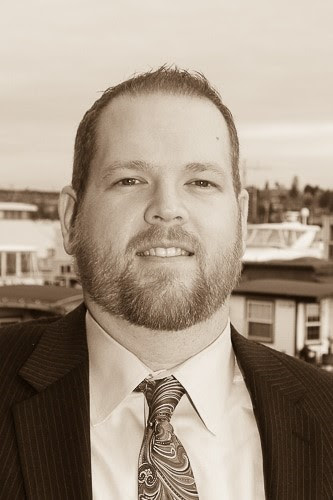
Congratulations to Westin McLean for being named as the newest shareholder at Lether Law Group. This distinction recognizes Westin’s exemplary leadership and mentorship at the firm, as well as the excellent results he has obtained for our clients. Westin is licensed in both Washington and Oregon, and provides invaluable experience based upon his years of practice in the Oregon market. For those who have been lucky enough to work with Westin, you can appreciate his hard work and the great advice he has provided to all of his clients.
Congratulations Westin for a job well done. We look forward to continuing to grow Lether Law Group with you in this new decade.
If you would like to learn more about Westin McLean or retain him to assist on any matter, please contact our office or Westin directly.